
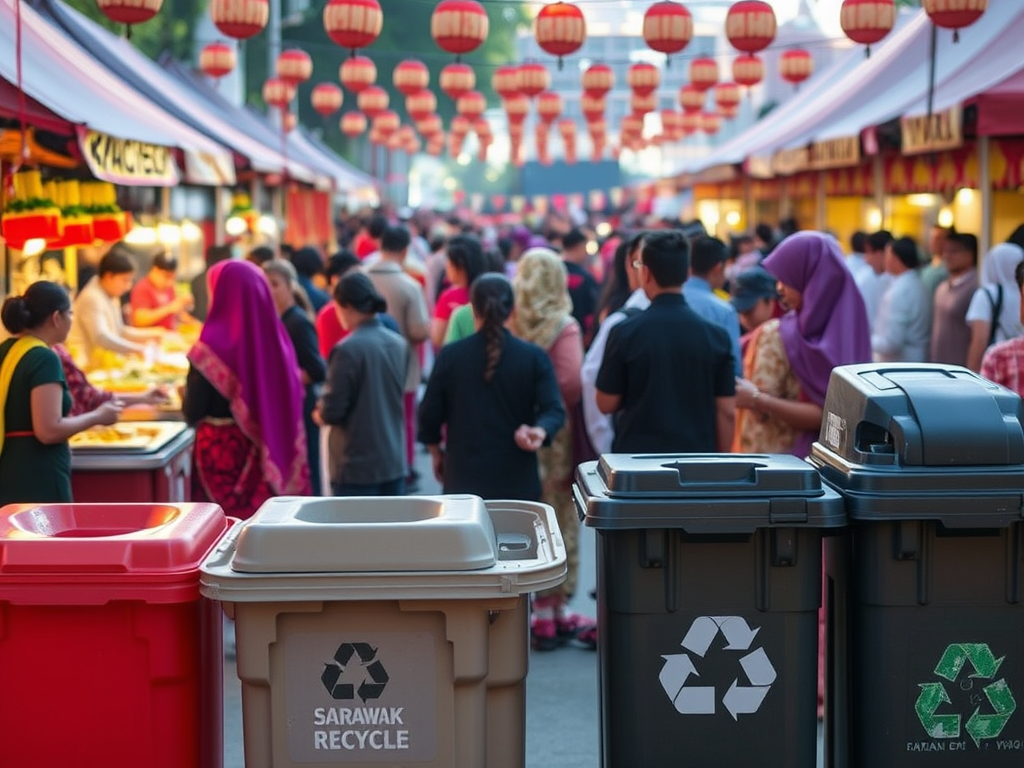
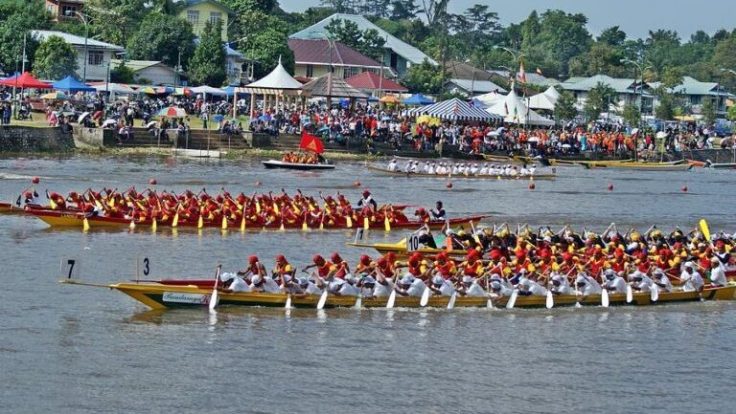
Sarawak, the land of the Hornbills, is renowned for its rich tapestry of cultures. This vibrant mosaic is best exemplified during its major festivals. The thrilling races of the Sarawak Regatta show its excitement. The spiritual solemnity of Pesta Kaul highlights its traditions. The Gawai Bazaar offers joyous celebrations. The Ramadhan Bazaar provides communal warmth. Together, these events testify to the state’s unity and heritage. But amidst the colourful costumes, traditional dances, and mouth-watering delicacies, there’s a less celebrated spectacle. It’s more worrying: the mountain of unsorted waste.

Glaring missed opportunity
These festivals embody beauty and community spirit. Yet, the lack of proper waste segregation is a glaring missed opportunity. It’s a chance to manage the immense volume of trash. It is also an opportunity to educate the public on a critical environmental issue. This proactive approach is in line with the state’s broader vision. As Premier Tan Sri Abang Johari Tun Openg has repeatedly emphasized, Sarawak is committed to a sustainable future.
“We want Sarawak to be a state that is progressive and environmentally friendly.” – Abang Jo Premier of Sarawak
He has spoken on the importance of an environmentally friendly economy. He noted that “We want Sarawak to be a state that is progressive and environmentally friendly.” He has also stated, “Don’t waste the waste.” According to him, we should monetise the waste. This highlights the potential for waste to be a valuable resource. These words are not just words. They serve as guiding principles. These principles drive initiatives to create a circular economy. They also aim to improve waste management across the state.
Shifting Our Perspective on Waste
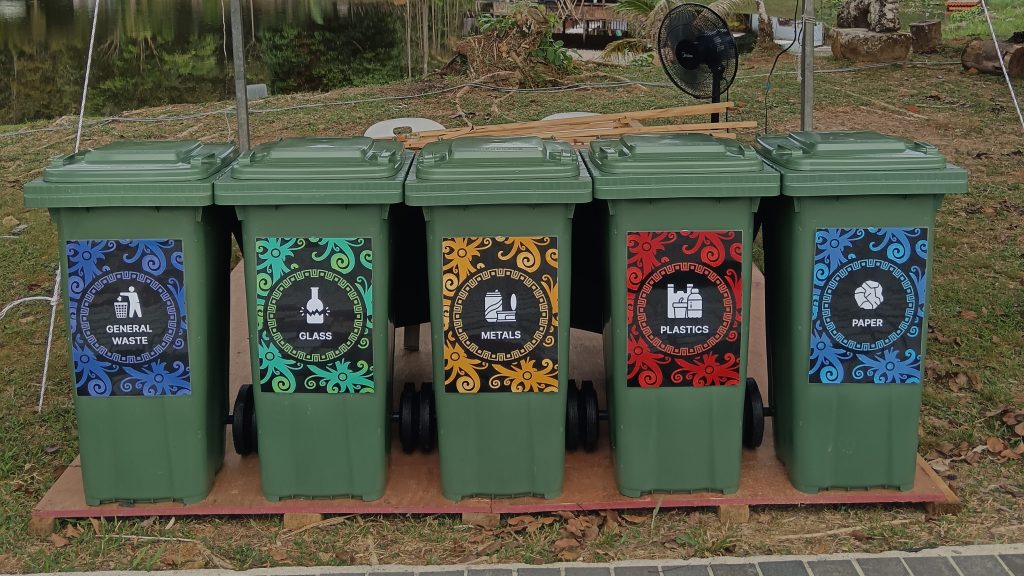
Imagine a festival where every food stall has clearly marked bins for recyclables, compostable materials, and general waste. Imagine a festival with volunteers guiding attendees on correct waste disposal. This turns a mundane task into a learning moment. This isn’t about shaming; it’s about shifting our perspective. Waste isn’t just “rubbish” to be discarded; it’s a valuable resource. The plastic bottles, aluminum cans, and cardboard boxes left behind after a festival could be recycled into new products. This process reduces the need for virgin materials. It also cuts down on pollution. The food scraps and organic waste could be composted, returning nutrients to the soil.
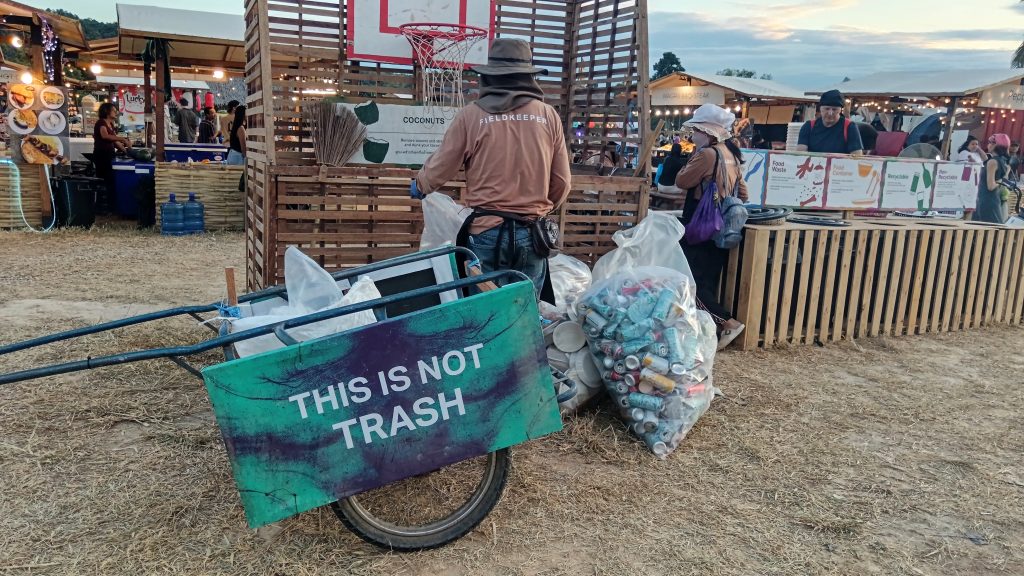
By failing to segregate waste at these large-scale events, we’re not just creating a logistical headache for our sanitation workers. We’re sending a powerful, if unintentional, message that waste management isn’t a priority. We’re missing a prime opportunity to instill a sense of responsibility in our communities. This is particularly important for fostering environmental consciousness among the younger generation.
Collaboration is key
The solution isn’t complex. It requires collaboration between festival organizers, local councils, and environmental groups. A small but necessary budget allocation will be required. This allocation provides the infrastructure needed—from clearly labeled bins to educational signage. It even includes dedicated “eco-stations” manned by volunteers. This initial investment isn’t just a cost; it’s a foundation for future improvements. Data collected from a properly segregated waste stream includes the volume of plastics and the amount of organic waste. These data points can identify key waste issues. They also inform better and more efficient strategies for the next festival.
It’s also about data
We don’t have to look far for a shining example. The Rainforest World Music Festival (RWMF) has made significant strides in this area. The RWMF has partnered with the Sarawak Tourism Board (STB). They also collaborated with local waste management companies. Together, they have successfully implemented waste segregation and collection. The organizers don’t just put out bins; they actively monitor and report on their progress. Data from recent festivals shows that a significant percentage of waste was successfully diverted from landfills. The waste was then either recycled or composted. This transparent data collection provides a tangible benchmark and allows for targeted improvements year after year.
This successful model demonstrates that with foresight, other large-scale events can succeed too. Sharing a commitment also plays a significant role.
The organizers of the Sarawak Regatta, Pesta Kaul, Gawai Bazaar, and Ramadhan Bazaar could start discussions. They should talk with the Sarawak Tourism Board. They should begin these discussions to gain insights from their experience.
They can see how their proven strategies can be adapted. By integrating waste segregation into their event planning, festival organizers and local councils can create powerful platforms for change. This transformation happens one segregated bin at a time.
Let’s make our festivals a reflection of our values—not just our cultural pride, but our commitment to a sustainable future.
 Dayak Wanderer
Leave a comment